Preschool Admission in Noida: A Complete Guide for Parents
Posted on October 29, 2026
by firstcry noida
0 Comments
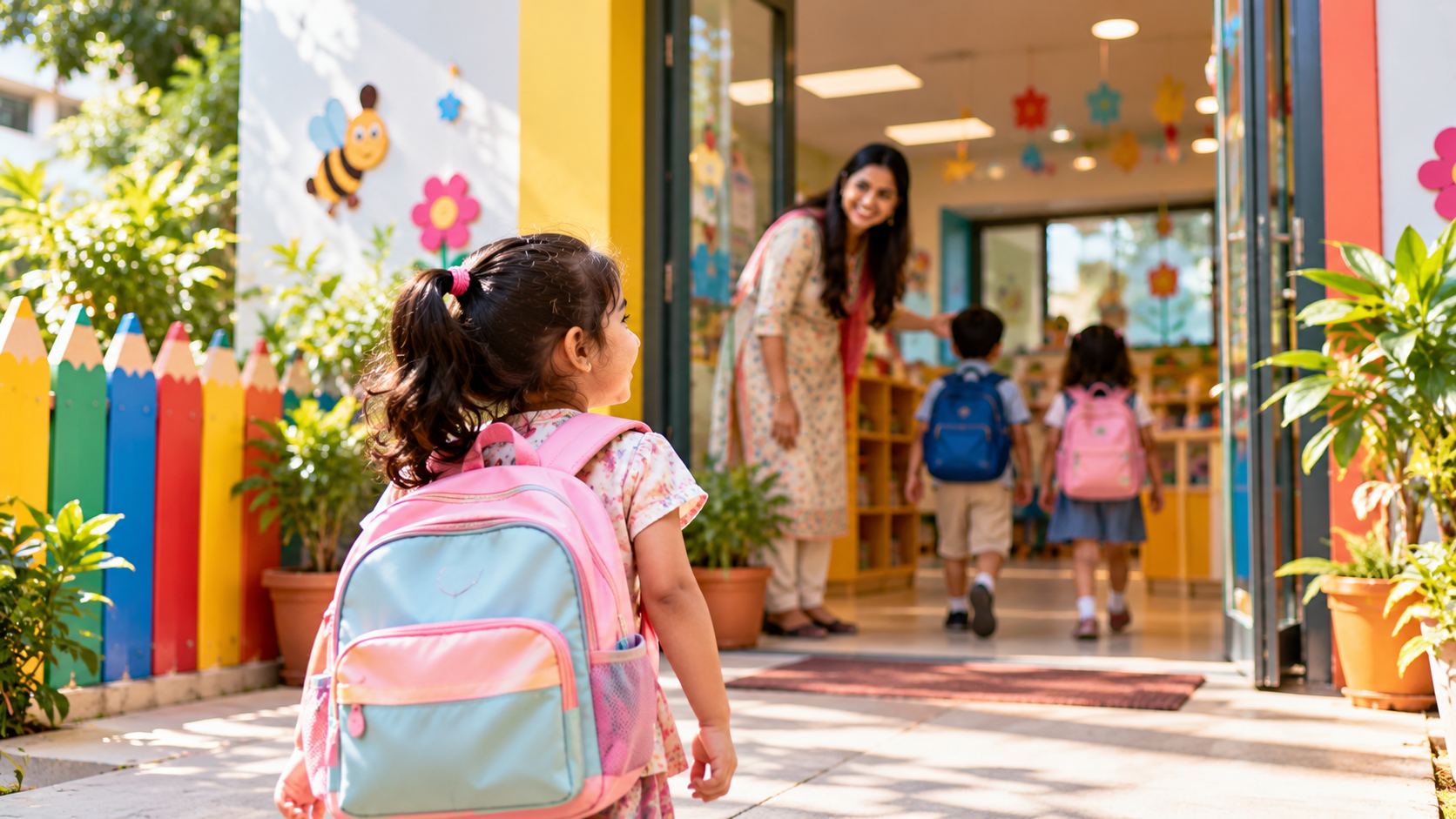
Choosing a preschool is one of the first major decisions in a child’s educational journey. Parents searching for preschool admission in Noida often want to understand age eligibility, admission procedures, required documents, school fees, teaching methods, and how to select a safe and welcoming learning environment.
The preschool years help children develop communication, social interaction, creativity, early reasoning, and independence. A positive first school experience can help children become more comfortable exploring new ideas, interacting with others, and participating in everyday learning activities.
If you are planning preschool admission for your child, this guide explains the key factors to consider, how to prepare for the application process, and what to ask when evaluating a preschool such as FirstCry Noida.
What Is Preschool Education?
Preschool education introduces children to structured learning before they begin primary school. It generally includes programmes such as playgroup, nursery, and other pre-primary classes, although programme names and age requirements vary between institutions.
Unlike formal primary education, preschool learning commonly combines play, conversation, storytelling, music, movement, creative activities, and hands-on exploration.
A well-designed early learning programme can help children develop:
- Language and communication: Listening, speaking, expressing needs, learning vocabulary, and enjoying stories.
- Early mathematical thinking: Exploring numbers, shapes, patterns, sizes, and simple comparisons.
- Social skills: Sharing, taking turns, cooperating, and interacting with classmates.
- Emotional development: Expressing feelings, building confidence, and gradually becoming comfortable with new routines.
- Physical coordination: Developing movement, balance, and fine motor skills through age-appropriate activities.
- Creativity and curiosity: Exploring materials, asking questions, imagining possibilities, and solving simple problems.
Parents should look for a preschool that supports the whole child rather than concentrating exclusively on early reading and writing.
What Is the Right Age for Preschool Admission in Noida?
Age eligibility is one of the first things to check when researching preschool admission in Noida. The appropriate entry age depends on the programme, the school’s admission policy, the academic session, and applicable education rules.
India’s National Education Policy 2020 describes a foundational stage covering ages three to eight, with three years of preschool followed by Classes 1 and 2. The National Curriculum Framework for the Foundational Stage also provides guidance for early childhood learning and development.
You can read the government’s National Curriculum Framework for the Foundational Stage for more information about the educational approach.
Before applying, ask the preschool:
- What is the minimum age for the programme you are considering?
- What date is used to calculate age eligibility?
- Is previous preschool experience necessary?
- Which birth-date documents are accepted?
- Are there any additional admission conditions?
Do not assume that one age rule applies to every programme or school in Noida. Confirm the applicable criteria with the specific school for your intended academic session.
Which Preschool Programme Should You Choose?
Preschools may offer different programmes depending on a child’s age and developmental needs. The programme names below are common examples, not a guarantee that every school offers all of them.
Playgroup
Playgroup programmes typically introduce younger children to a group setting through songs, stories, movement, sensory activities, and supervised play.
Parents should ask about the programme’s age requirements, session duration, settling-in process, and level of support for children who are attending school for the first time.
Nursery
Nursery usually offers a more structured preschool experience. Children may participate in storytelling, art, language activities, number exploration, movement, and group learning.
The emphasis should remain on age-appropriate experiences that encourage children to participate, explore, and learn at their own pace.
Kindergarten and Other Pre-Primary Classes
Some schools offer kindergarten or other pre-primary programmes to prepare children for the transition to primary education. The names and sequence of these classes vary by institution and education system.
Ask how the programme builds on earlier learning, which skills children practise, and how teachers support readiness for the next stage.
Documents Required for Preschool Admission
Preparing the paperwork early can make the application process easier. However, each preschool sets its own requirements, so request its official checklist before submitting documents.
Commonly requested documents may include:
- Child’s birth certificate or accepted proof of date of birth.
- Recent photographs of the child.
- Parent or guardian photographs, if required.
- Parent or guardian identity documents, where requested.
- Residential address proof, if required.
- Completed admission or registration form.
- Previous school information, where applicable.
- Medical or immunisation information, if requested.
- Additional declarations specified by the school.
Check that the child’s name and date of birth are consistent across documents. Keep copies of the application and any acknowledgement provided by the school.
Submit personal information only through the school’s official admission process, and avoid sending unnecessary sensitive documents.
How to Apply for Preschool Admission in Noida
Although individual admission procedures differ, the following steps provide a useful starting point.
Step 1: Research Preschools in Your Preferred Area
Begin by shortlisting schools that are practical for your family’s location and schedule. Consider the distance from home, timings, learning approach, classroom environment, safety arrangements, and fees.
If you are considering FirstCry Noida, start with the official FirstCry Noida website and contact the school to confirm its current programmes and admission availability.
Step 2: Confirm Eligibility and Admission Dates
Ask whether applications are open for your preferred academic session. Confirm the age criteria, cut-off date, application deadline, and whether the programme has available seats.
Admission dates can change between sessions, so do not rely on outdated advertisements or another school’s schedule.
Step 3: Understand the Application Process
Find out whether the school accepts online applications, physical forms, or enquiries followed by registration.
Complete all required fields accurately. Before submitting, review your contact details, your child’s information, and any supporting documents.
Step 4: Submit the Required Documents
Follow the school’s instructions for submitting documents. Ask whether originals are required for verification or whether digital or photocopied documents are sufficient at the application stage.
Keep a record of your submission and any reference number provided.
Step 5: Visit the Preschool
If visits are available, take the opportunity to observe the learning environment. Look at classroom cleanliness, learning materials, play spaces, teacher-child interactions, and supervision.
Ask how the school helps children settle in and how it communicates with parents during the first few weeks.
Step 6: Review Fees and Confirm Admission
Before accepting an offer, request the complete fee structure and understand all applicable charges. Ask about registration fees, tuition, meals, uniforms, books, transport, and activities where relevant.
Check payment deadlines, school timings, joining instructions, and any required forms before completing admission.
How to Choose the Right Preschool in Noida
A school’s reputation or appearance alone cannot tell you whether it is the right fit for your child. Consider the daily learning experience and the quality of care.
Teaching Approach and Learning Activities
Look for a balance of guided activities and free exploration. Stories, music, puzzles, building blocks, drawing, pretend play, and movement can support different aspects of development.
Ask how teachers adapt activities for children with different interests and learning speeds. A good preschool should encourage participation without placing unnecessary academic pressure on young children.
Teacher Qualifications and Interaction
Teachers influence how children feel about learning and relationships. During a visit, observe whether teachers communicate patiently, respond to children’s needs, and encourage questions.
Ask about staff qualifications, classroom supervision, teacher availability, and how the school handles children who feel upset or need extra support.
Safety and Hygiene
Safety arrangements should be clear and appropriate for young children.
Ask about visitor access, authorised child collection, classroom supervision, emergency procedures, sanitation, and communication with parents if a child becomes unwell or an incident occurs.
Observe whether classrooms, washrooms, toys, and play equipment appear clean and well maintained.
Facilities and Learning Resources
Books, age-appropriate toys, creative materials, and suitable play spaces can enrich the preschool experience. However, more facilities do not automatically mean better education.
Consider whether resources are accessible to children, safely maintained, and used meaningfully during the day.
Parent Communication
A good parent-school relationship helps families understand how their child is adjusting and participating.
Ask whether teachers share progress updates, arrange parent-teacher meetings, and provide guidance when a child is struggling with routines or social interaction.
Location, Timings, and Fees
A convenient location can make daily travel easier for children and parents. Consider the journey time, school schedule, and whether transport is available if you need it.
Request a complete fee breakdown before comparing schools. Look at the overall cost alongside teaching quality, safety, communication, and the learning environment.
How to Prepare Your Child for Preschool
Starting preschool can feel exciting, unfamiliar, or both. Parents can help children adjust by building everyday skills and creating positive expectations.
Establish a simple routine. Regular times for waking, meals, play, and sleep can help children become familiar with a predictable day.
Read stories together. Picture books and storytelling support vocabulary, listening, imagination, and conversation. Let your child ask questions and describe what they see.
Encourage independence. Practise simple tasks such as putting toys away, washing hands with appropriate support, and communicating basic needs.
Create opportunities for social play. Playing with other children can help develop sharing, turn-taking, cooperation, and confidence.
Talk positively about school. Explain that preschool is a place to play, explore, meet teachers, and discover new things. Listen to your child’s questions without making unrealistic promises.
Allow time to settle in. Children respond differently to new environments. Stay in contact with teachers and follow the school’s guidance if your child needs additional time or reassurance.
Children do not need to master reading or writing before beginning preschool. The goal is to encourage curiosity, communication, confidence, and readiness to participate in age-appropriate activities.
Why Play-Based Learning Matters
Play is an important part of early childhood learning. Children can explore ideas, practise language, develop coordination, and learn how to interact with others through meaningful play experiences.
The government’s National Curriculum Framework for the Foundational Stage explains the importance of developmentally appropriate learning during the early years.
When evaluating a preschool, ask how the programme combines stories, movement, creative activities, exploration, and social interaction. Find out how teachers observe children’s progress and adapt activities to their developmental needs.
A nurturing learning environment should allow children to ask questions, make discoveries, and practise new skills without fear of making mistakes.
Preschool Admission at FirstCry Noida
Parents interested in FirstCry Noida should contact the school directly to confirm its current preschool programmes, admission availability, age criteria, application dates, documents, fees, and timings.
Before applying, ask the school:
- Which preschool programmes are currently available?
- What age criteria and cut-off dates apply?
- Is admission open for the upcoming academic session?
- What documents are required?
- What is the complete fee structure?
- What teaching approach and daily activities are followed?
- Can parents visit the school before admission?
- How are children’s progress and settling-in experiences communicated?
Begin with the official FirstCry Noida website and use the school’s published contact channels to request up-to-date information.
Do not assume that every programme, facility, or admission policy offered by another FirstCry-branded preschool is available at FirstCry Noida. Confirm details with the specific school before making a decision.
Frequently Asked Questions About Preschool Admission in Noida
1. What is the right age for preschool admission in Noida?
The appropriate age depends on the programme, school policy, academic session, and applicable rules. Contact the preschool to confirm its current age criteria and cut-off date before applying.
2. Which documents are required for preschool admission?
Schools may request a birth certificate, photographs, parent identification, address proof, and a completed application form. Some may request additional records. Obtain the school’s official checklist before submitting documents.
3. When should parents apply for preschool admission?
Begin researching schools several months before the expected academic session. Confirm application opening dates and deadlines directly with each school because schedules vary.
4. Is previous preschool experience necessary?
Not necessarily. Requirements depend on the programme and school. Ask whether children can join without previous playgroup experience and how the school supports first-time learners.
5. How can parents prepare children for preschool?
Introduce predictable routines, reading, creative play, simple independence skills, and opportunities to interact with others. Keep preparation relaxed and allow your child time to become comfortable with new experiences.
6. What should parents look for during a preschool visit?
Observe teacher-child interaction, classroom hygiene, supervision, play resources, and the general atmosphere. Ask about safety procedures, daily routines, fees, and parent communication.
7. How can I confirm admission details at FirstCry Noida?
Visit the official FirstCry Noida website and contact the school through its published channels. Confirm available programmes, age criteria, admission dates, documents, fees, and timings directly.
Conclusion
Choosing a preschool is about finding a learning environment where your child can feel secure, develop confidence, explore ideas, and build relationships. Parents researching preschool admission in Noida should compare teaching approaches, safety practices, daily routines, communication, location, and total costs before making a decision.
Start the process early, prepare the required documents, and ask schools specific questions about their programmes and policies. If you are considering FirstCry Noida, contact the school directly to verify current admission details.
A thoughtful choice can help your child begin their educational journey with confidence, curiosity, and a positive attitude toward learning.