Best Preschool in Noida: How to Choose the Right Early Learning Centre for Your Child
Posted on November 10, 2026
by admin
0 Comments
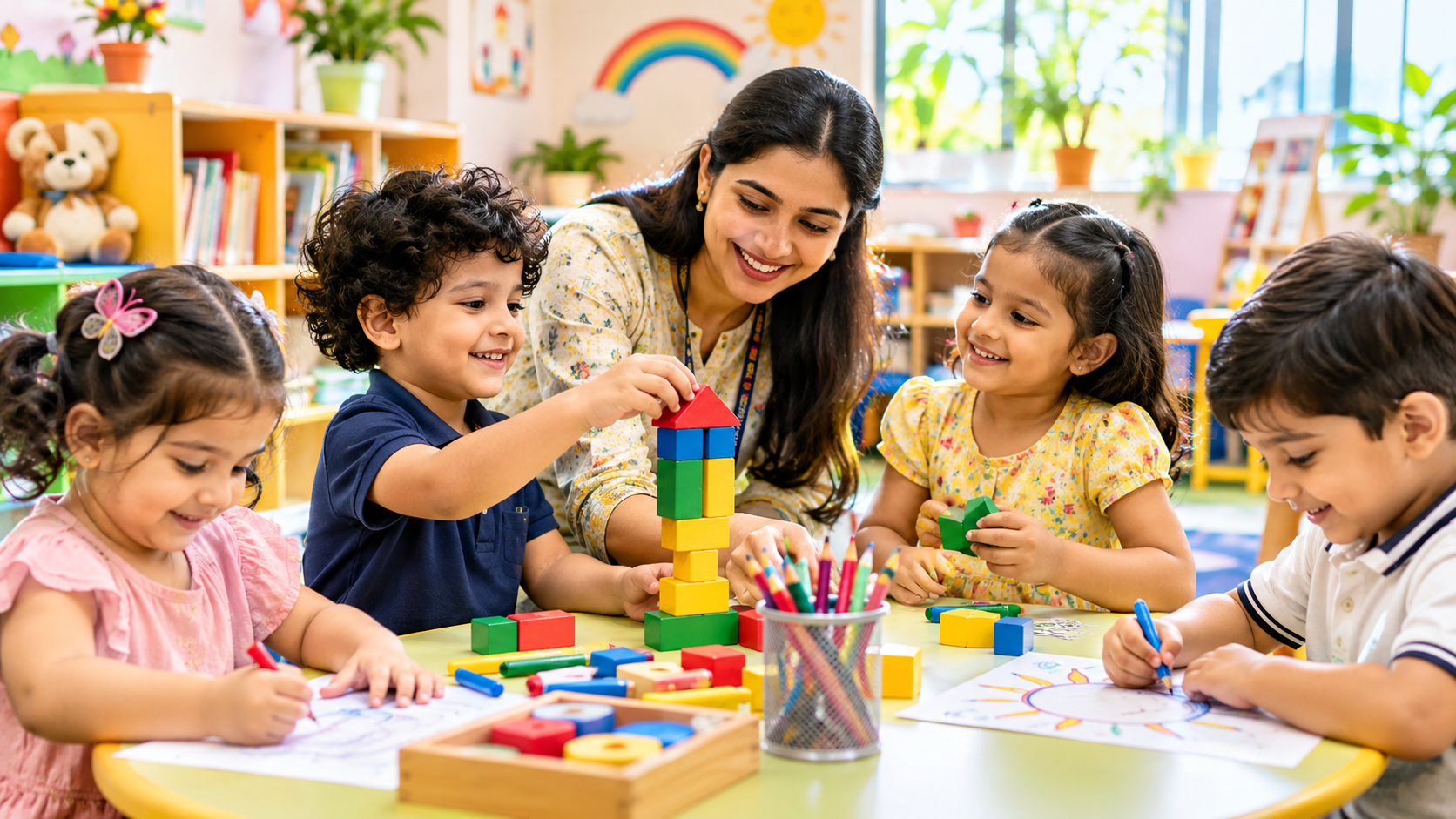
Choosing a preschool is one of the first important decisions parents make in their child’s educational journey. It is where children begin exploring the world beyond their homes, interacting with other children, developing communication skills and discovering the joy of learning. For parents in Noida, finding the right preschool can feel challenging because there are many options across different sectors, each offering different programmes, facilities and teaching approaches.
But how do you identify the Best Preschool in Noida for your child? Is it the school with the most attractive classrooms, the widest range of activities or the most popular name?
The right choice should go beyond appearances. Parents should look for a welcoming environment where children feel secure, receive individual attention, learn through meaningful activities and develop at a comfortable pace.
This guide explains the important factors to consider when comparing preschools and choosing an early learning environment that supports your child’s overall development.
Why Is Choosing the Right Preschool Important?
The preschool years provide an important foundation for children’s social, emotional, physical and language development. The National Curriculum Framework for Foundational Stage by NCERT highlights the importance of holistic development and age-appropriate learning experiences.
A positive preschool experience can help children:
-
Develop confidence when interacting with others.
-
Improve speaking and listening skills.
-
Build early problem-solving abilities.
-
Explore creativity through art, music and imaginative play.
-
Develop coordination through movement and physical activities.
-
Learn cooperation, sharing and taking turns.
-
Become familiar with simple classroom routines.
Preschool should not be treated simply as an early version of formal schooling. Children need opportunities to explore, ask questions, experiment and learn through age-appropriate experiences.
When searching for a Top Preschool in Noida, parents should therefore focus on the quality of everyday learning experiences rather than only the school’s appearance or promotional claims.
10 Important Factors to Consider When Choosing the Best Preschool in Noida
Before making an admission decision, evaluate the school across several practical areas. These factors can help you compare different preschool programmes more confidently.
1. Understand the Teaching Methodology and Curriculum
The curriculum is one of the most important factors to examine. Young children generally benefit from learning experiences that combine guided activities, exploration, interaction and play.
Look for a preschool programme that introduces early concepts through:
-
Storytelling and picture books.
-
Rhymes, music and movement.
-
Art, drawing and creative activities.
-
Puzzles and age-appropriate games.
-
Sensory exploration.
-
Group activities and conversations.
-
Basic number, shape, colour and language recognition.
Ask the school how these activities are planned for different age groups. A well-organised programme should provide a balance between structured learning and opportunities for children to explore independently.
2. Check Teacher Experience and Child Interaction
Teachers play a central role in shaping a child’s first experience outside the home. Their ability to communicate patiently, encourage participation and understand individual needs can make a meaningful difference.
During a campus visit, observe how teachers interact with children.
Consider these questions:
-
Do teachers communicate in a warm and respectful manner?
-
Do they encourage children to participate?
-
Are they patient when a child needs additional time?
-
Do they respond appropriately to questions and emotions?
-
Are activities adapted to different learning abilities?
Parents should also ask about teacher qualifications, early childhood education training and the support staff available in each classroom.
3. Evaluate Safety, Hygiene and Cleanliness
Safety should be a priority when selecting a Best Play School in Noida. Young children need an environment where they can move, play and explore under appropriate supervision.
Check the following during your visit:
-
Secure entry and visitor management procedures.
-
Supervision during classroom and outdoor activities.
-
Clean classrooms, floors and common areas.
-
Child-friendly furniture and equipment.
-
Clean and accessible washroom facilities.
-
Safe play equipment without visible damage.
-
First-aid arrangements and emergency procedures.
-
Clear policies for child pickup and handover.
Ask how the school communicates with parents if a child becomes unwell or an unexpected incident occurs. Do not rely only on photographs or website descriptions; observe the actual environment.
4. Look for Age-Appropriate Classrooms and Learning Resources
A preschool classroom should be designed around the needs of young learners. Attractive decoration is useful, but the space should also support exploration, movement and independent participation.
Look for:
-
Child-sized tables and chairs.
-
Accessible books, toys and learning materials.
-
Activity corners for creative exploration.
-
Age-appropriate educational resources.
-
Sufficient space for movement and group activities.
-
Proper lighting and ventilation.
-
Organised storage and clean learning areas.
A thoughtfully arranged classroom allows children to participate more comfortably and become familiar with their surroundings.
5. Understand the Importance of Play-Based Learning
Play is an important part of early childhood learning. Through play, children practise communication, cooperation, imagination, coordination and problem-solving.
For example, building blocks can introduce basic concepts such as size, shape and balance. Pretend-play activities can encourage language development and social interaction. Drawing and painting can help children express ideas creatively.
When comparing an Early Learning Centre in Noida, ask whether the daily programme includes a variety of meaningful activities rather than relying heavily on worksheets or memorisation.
The aim should be to make learning engaging while allowing children to develop at their own pace.
6. Check Individual Attention and Classroom Strength
Every child has a different personality, learning pace and comfort level. Some children participate immediately, while others need more time to become familiar with teachers and classmates.
Individual attention helps teachers understand these differences and provide suitable support.
Ask the school:
-
How many children are there in each class?
-
How many teachers or support staff are present?
-
How does the school support children who are shy or hesitant?
-
How are individual learning and behavioural needs addressed?
Do not judge a preschool only by its total enrolment. Understand the actual classroom arrangement and how children are supervised throughout the day.
7. Explore Outdoor Play and Physical Activities
Physical activity is an important part of a child’s development. Running, jumping, balancing, climbing and participating in movement-based games can support coordination and physical confidence.
During your visit, check whether the school provides suitable opportunities for outdoor or indoor movement activities.
Also ask:
-
Is the play area appropriate for the children’s age?
-
Are children supervised during outdoor activities?
-
Is the equipment maintained properly?
-
Are physical activities included in the regular timetable?
-
Are there suitable alternatives during unsuitable weather?
A balanced preschool routine should provide opportunities for both quiet learning and active play.
8. Understand Parent-Teacher Communication
Parents should be able to understand how their child is adjusting, participating and progressing.
A good communication process helps families remain informed about everyday activities, important updates and any concerns that require attention.
Before admission, ask about:
-
Parent-teacher meetings.
-
Progress updates.
-
Communication channels.
-
Updates about activities and events.
-
Procedures for reporting health or safety concerns.
-
Opportunities to discuss a child’s development.
Regular communication also helps parents and teachers work together to support the child’s learning journey.
9. Compare Location, Timings and Fee Structure
Practical considerations are important because preschool becomes part of the family’s daily routine.
For parents living in Noida, compare schools based on their location, travel time, operating hours and admission requirements.
Before finalising a preschool, confirm:
-
The complete admission fee.
-
Tuition and recurring charges.
-
Charges for books, uniforms and activity materials.
-
Meal or transport costs, if applicable.
-
School timings and holidays.
-
Admission age requirements.
-
Refund and withdrawal policies.
Ask for the complete fee structure in writing so you can understand the total cost instead of comparing only the initial admission amount.
10. Visit the Campus Before Making a Decision
A website or brochure can introduce you to a preschool, but a campus visit gives you a better understanding of the actual learning environment.
Try to visit during regular school hours, when you can observe classroom routines and interactions.
Watch how children participate, how teachers respond to them and whether the environment feels welcoming. If possible, speak with the school administration and clarify any questions about curriculum, safety, admissions and parent communication.
You should also consider your child’s comfort during the visit. A school that looks impressive to adults may not necessarily feel comfortable to a young child.
Why Consider FirstCry Noida for Your Child’s Early Learning Journey?
Choosing a preschool is about finding an environment that aligns with your child’s early learning needs and your family’s expectations.
Parents exploring FirstCry Noida can use the points discussed in this guide as a practical starting point for understanding the preschool’s programme and suitability.
Before making an admission decision, connect with the school to learn about its current curriculum, age groups, classroom arrangements, learning activities, safety procedures and admission process.
A direct conversation and campus visit can help you understand whether the environment matches what you are looking for in a preschool.
Explore the official website: FirstCry Noida.
A Simple Preschool Visit Checklist for Parents
Use this checklist when comparing different preschools in Noida.
| What to evaluate | What parents should check |
|---|---|
| Curriculum | Age-appropriate, engaging learning activities |
| Teachers | Qualifications, experience and interaction |
| Safety | Entry procedures, supervision and emergency planning |
| Hygiene | Clean classrooms, washrooms and play areas |
| Classroom | Child-friendly furniture and learning resources |
| Play activities | Indoor and outdoor opportunities |
| Individual attention | Classroom size and staff availability |
| Communication | Regular updates and parent meetings |
| Fees | Complete fee structure and additional charges |
| Location | Convenient travel and suitable timings |
Shortlist two or three schools, visit each one and compare your observations before making the final decision.
Conclusion
Finding the Best Preschool in Noida requires more than comparing facilities, advertisements or admission offers. Parents should consider the complete early learning experience, including teaching methodology, teacher interaction, classroom safety, play opportunities, individual attention and communication.
The right preschool should provide a welcoming environment where children feel comfortable exploring new ideas, developing relationships and building essential early skills.
Take time to visit the campus, ask relevant questions and understand the programme before making your decision. A thoughtful choice today can help create a positive beginning for your child’s educational journey.
If you are considering FirstCry Noida, visit to explore the school and enquire about its current programmes and admissions.
Frequently Asked Questions
1. What should I look for in the Best Preschool in Noida?
Look for a preschool with an age-appropriate curriculum, experienced teachers, a safe and hygienic environment, engaging learning activities, individual attention and effective parent communication. Visiting the campus can help you evaluate these factors.
2. What is the right age to start preschool?
The appropriate starting age depends on the child’s development and the school’s admission criteria. Parents should check the age requirements for playgroup, nursery and other programmes before applying.
3. What is the difference between a preschool and a play school?
The terms are often used interchangeably. A play school generally focuses on learning through play, interaction and exploration, while preschool may include a broader early childhood programme that prepares children for the transition to formal schooling.
4. How do I choose a good Early Learning Centre in Noida?
Compare the curriculum, teachers, safety arrangements, classroom environment, learning resources, play activities, parent communication and fee structure. Visit the centre and ask how it supports children’s individual development.
5. Why is play-based learning important in preschool?
Play-based learning allows children to explore concepts through hands-on activities, games, storytelling and interaction. It can support creativity, communication, social skills, coordination and early problem-solving abilities.